Fashion
How to Measure Shirt Chest Width on a Flat Garment
Keep the measurement route beside the number.
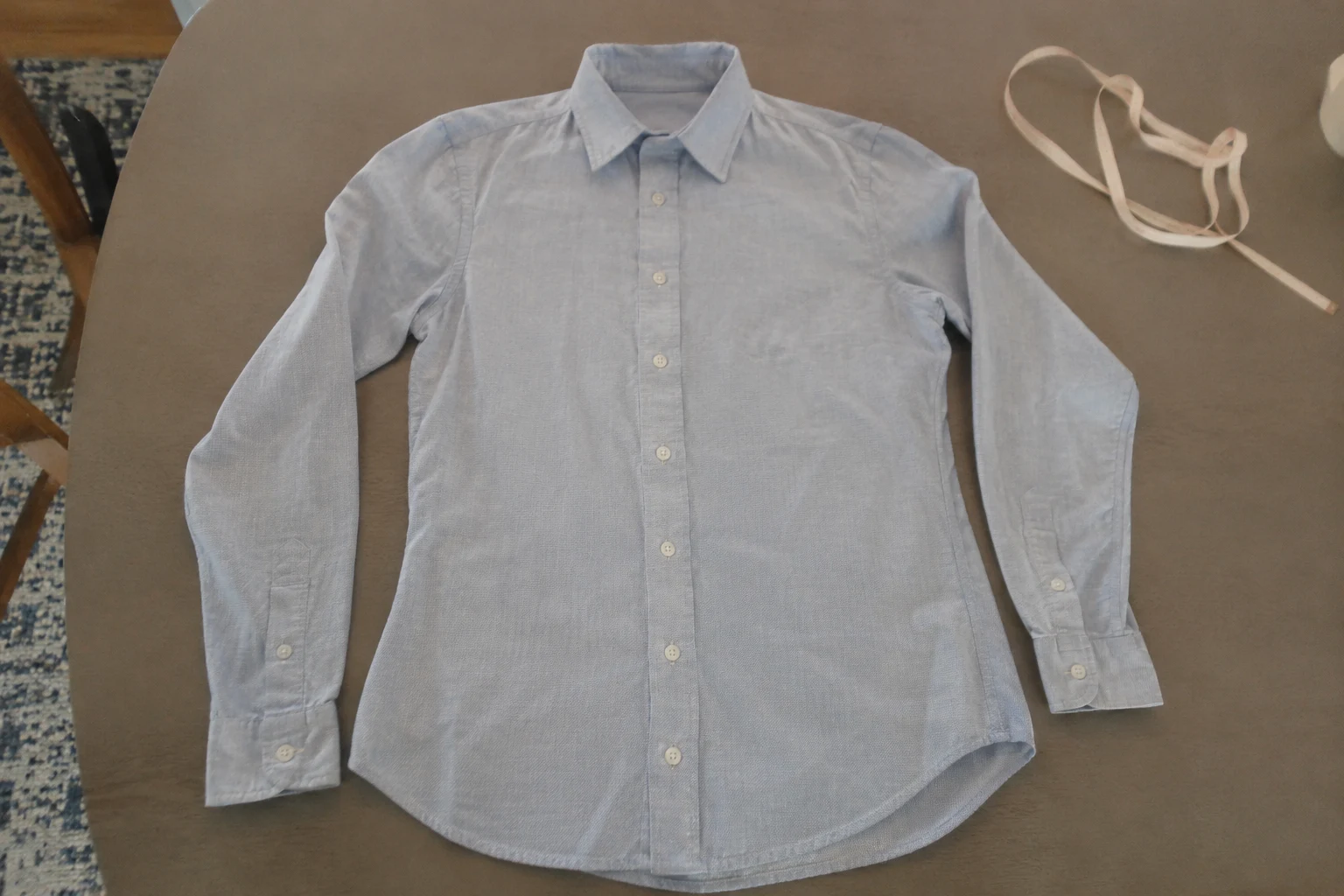
To measure shirt chest width, button the shirt, place it flat on its back and smooth hidden folds without stretching it. Measure straight from the bottom of one armhole to the other. Record the route, units and garment state, then use the same setup on the shirt you want to compare.
Start with the shirt rather than a body size
A chest-width reading describes a garment lying flat. A body chest measurement goes around a person. They need different labels even when a listing calls both chest size. Before comparing a number, ask whether it is a single flat width, a doubled garment dimension or a body circumference.
Use the flat clothing comparison method to keep this distinction in your notes. The useful question is whether two known garment measurements were taken in a compatible way. A matching label size alone cannot answer that question.
Prepare a repeatable armpit-to-armpit route
Close the shirt's normal front fastening, empty the pockets and place the garment on its back on a supporting surface. Spread it gently so hidden folds do not shorten the reading. Keep the cloth relaxed rather than pulling the sides outward to obtain a preferred number. Inspect the back as well as the visible front, especially when there are pleats.
Proper Cloth's chest-width instructions use a straight line between the bottoms of the armholes. Follow that named method when comparing with its dimensions. If another seller measures lower down the chest, preserve that location rather than silently treating the readings as equivalent.
Place a flexible tape straight across the chosen line. Read in one unit system, record the endpoints, then lift and replace the tape once to check your setup. If the two attempts differ, inspect folds and endpoints before choosing a value. Do not average two measurements taken on different routes.
What belongs in the comparison note?
| Field | Shirt you own | Shirt in a listing |
|---|---|---|
| Quantity | Single flat chest width | Ask whether width or circumference |
| Route | Bottom of armhole to bottom of armhole | Confirm the same endpoints |
| State | Fastened, relaxed, supported flat | Confirm fastening and stretch state |
| Units | Original reading retained | Convert only after retaining the original |
| Condition | Record relevant care state | Ask whether measurements are before or after care |
This note is deliberately more specific than fits like a medium. If the seller cannot explain the route, label the comparison unresolved. A photograph of an angled tape can help you identify that uncertainty, but it does not justify inventing an exact corrected reading.
Should you double a pit-to-pit measurement?
Doubling can express a nominal garment circumference under the flat-width convention. It does not transform the reading into a body measurement or tell you how much room you prefer. Proper Cloth's size-chart explanation distinguishes flat width dimensions from body measurements and explains its doubling convention.
For a fictional calculation, a 52 cm flat chest width doubles to 104 cm. A second shirt at 54 cm doubles to 108 cm. The flat difference is 2 cm and the nominal doubled difference is 4 cm. Keep those labels attached to the results; writing only four centimeters bigger conceals which quantity you compared.
Use the wearing and design ease guide when discussing room. Neither the doubled number nor the difference proves that shoulders, sleeves, collar or movement will work for the wearer.
How should you handle pleats, stretch and measurement tolerances?
Record whether the garment has back pleats and how they were arranged for the reading. An ordinary relaxed width and a stretched width are different states. If a listing supplies only one, ask which one it is. Avoid pulling elastic fabric until it reaches an arbitrary maximum and calling that the same method as a relaxed woven shirt.
A manufacturer's tolerance belongs to that manufacturer's measurement system. Proper Cloth publishes its own garment tolerances; those are not a universal acceptance rule for another seller or a used garment. Keep any quoted allowance linked to the source and dimension it actually covers.
Keep length and washing observations separate
An identical chest width does not establish equal shirt length. Use the high-point-shoulder versus center-back guide to retain the length route independently. If the shirt twists after care, the side-seam observation guide helps you record its behavior without assuming chest width explains it.
Before sending a comparison, verify that each number has a quantity, route, state and unit. Leave unknown fields visible and ask one specific follow-up question. That makes the record usable for a purchase discussion without turning it into a fit guarantee.