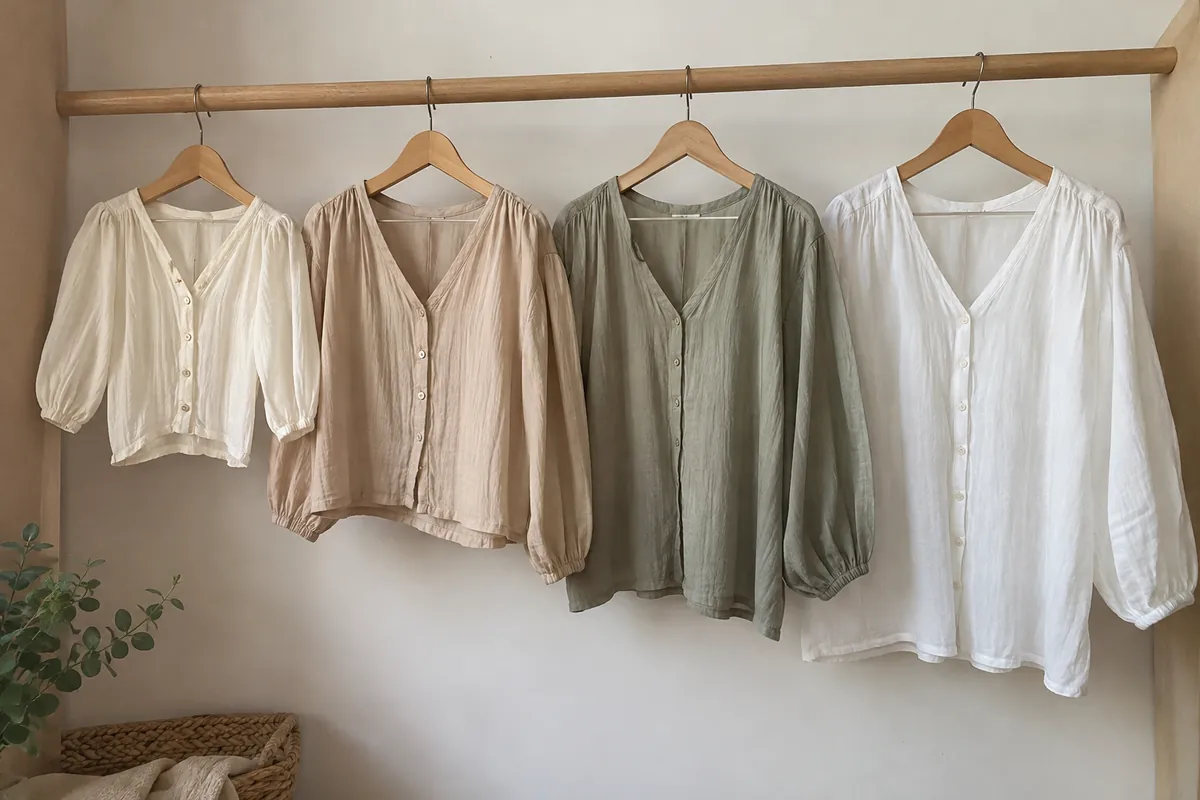
Fashion
Wearing Ease vs Design Ease: Five Questions Before You Choose
Room to move and room for a silhouette are different decisions.
Wearing ease allows movement; design ease creates a silhouette. A finished garment measurement includes the room built into the design, while a body chart describes the wearer. Compare matching measurements and try the intended layer before judging size. Extra room is not automatically a fitting mistake.
1. What is the room in a garment doing?
Wearing ease concerns movement and comfort. Design ease concerns the outline the designer intends, such as a deliberately loose blouse. These concepts help explain a garment; neither supplies one amount of room that everyone should choose.
Seamwork's original ease tutorial separates the two purposes and shows why a body chart and finished-garment chart answer different questions. Its sewing examples are useful explanations, not universal shopping allowances.
Start with a practical question: can you sit, reach and move comfortably in this particular piece? Then ask whether you enjoy its intended shape. A garment can meet one preference and miss the other.
Choose the idea you need to separate
These original abstract diagrams describe different purposes, not numerical allowances or body shapes.
Wearing ease
Check the room needed for the intended movement and layer. A diagram cannot set that amount for your particular garment.
Design ease
Look at the silhouette the maker intends and the one you prefer. Changing size can change other dimensions too.
Negative ease
A smaller finished dimension can be intentional in a designed stretch garment. It is not a general reason to buy smaller or stretch a fragile item.
2. Which measurement chart are you reading?
A body chart describes the person a size is intended for. A finished-garment chart describes the garment. Check that distinction before treating a larger number as an ordering error or deciding to move down a size.
| What the listing gives | What to establish first |
|---|---|
| Body measurements | Which finished dimensions or fit notes are available? |
| Finished measurements | Are they circumferences, flat widths or another method? |
| An unexplained size number | Which chart and measurement method define it? |
| A cutting or pattern dimension | Does it include allowances outside the finished seams? |
The flat measurement guide handles tape routes and matching methods. That step comes before interpreting differences as ease. Do not compare a flat width directly with a measurement around a body.
Choose the chart in front of you
Open the matching record, then ask for what is missing. More than one question may apply.
Body-size chart
Keep it labelled as body measurements. Request the corresponding finished dimensions or intended-fit description before guessing the garment room.
Finished-garment chart
Confirm circumference versus flat width, measurement location, units and fabric tension. Match the method before comparing.
Pattern or cutting dimension
Check which stitching lines or allowances define the record. A cutting edge is not automatically the finished garment dimension.
Unexplained number
Ask which garment area, chart type and measurement method the number describes. Keep the comparison unresolved until clarified.
3. Is a roomy shape the same as the wrong size?
A loose outline may be intentional, while a close outline may still need enough movement for its use. Check the neckline, shoulders, sleeves, length and the rest of the cut together. One roomy area does not prove that every other dimension should shrink.
Threads' pattern-measurement explanation, originally published in 2004, treats movement and silhouette as separate considerations. Keep that distinction without borrowing a fixed allowance from another garment or era.
For a hypothetical oversized shirt, compare the shape you want with a similar shirt you already wear. Notice whether the neckline stays where you intend and whether the sleeve length works. If the outline is simply not your preference, another cut may be more useful than treating the size label as a judgment about your body.
4. What does negative ease tell you about stretch?
Negative ease describes a finished garment dimension that is smaller than the corresponding body measurement. Some fitted stretch designs use it deliberately. It is not permission to force yourself into any small garment or assume every knit will stretch in a suitable way.
In the Folds' explanation distinguishes fitted knits from woven examples and discusses finished dimensions. The actual fabric and design still matter. A fiber label alone does not describe stretch direction, recovery or how a finished seam will behave.
Check the maker's intended fabric and fit notes. If they are missing, record the uncertainty. Do not stretch a fragile secondhand piece to find its limit; use the thrift inspection guide for condition checks that remain separate from sizing.
5. How can you make the comparison useful?
Keep the garment, underlayer and movement consistent while checking a specific concern. Try the clothing as you intend to wear it. A coat over a fine shirt and the same coat over a bulky sweater are different combinations; record the layer rather than attributing every difference to the label.
Note what feels restricted, what is deliberately loose and what remains unclear. Reset a caught layer gently before repeating a movement. Stop pulling if a seam is under strain. Ask the seller for the chart type or finished dimension you need, and check return conditions before accepting an unresolved comparison.
The size-inclusion guide keeps the label in perspective. Your decision is about a garment's usefulness and your preferred shape, not fitting a body into a number.
Frequently asked questions
Is design ease optional?
It describes part of the intended silhouette. You can prefer a different cut, but removing room may change more than one aspect of the garment.
Do finished measurements already include ease?
They describe the garment's finished dimensions. Compare the corresponding body and garment dimensions using matching methods to understand the relationship.
Is seam allowance the same thing?
Seam allowance lies beyond the stitching line for construction. It is different from the room available inside the finished garment.
Does every knit need negative ease?
Some fitted stretch designs use it. Others do not. Follow the particular design and fabric requirements rather than applying one rule to all knits.
Should I size down whenever a shirt looks loose?
Check its intended outline and the other fit points first. A smaller size may change the shoulders, sleeves and length as well as the area that looks roomy.
Can one measurement guarantee comfort?
Comfort also depends on construction, fabric, the layer worn and movement. Treat the measurement as information to combine with those checks.