Fashion
How to Measure Sweater Length Without Stretching the Knit
A knit can give you two honest lengths. Say which one you recorded.
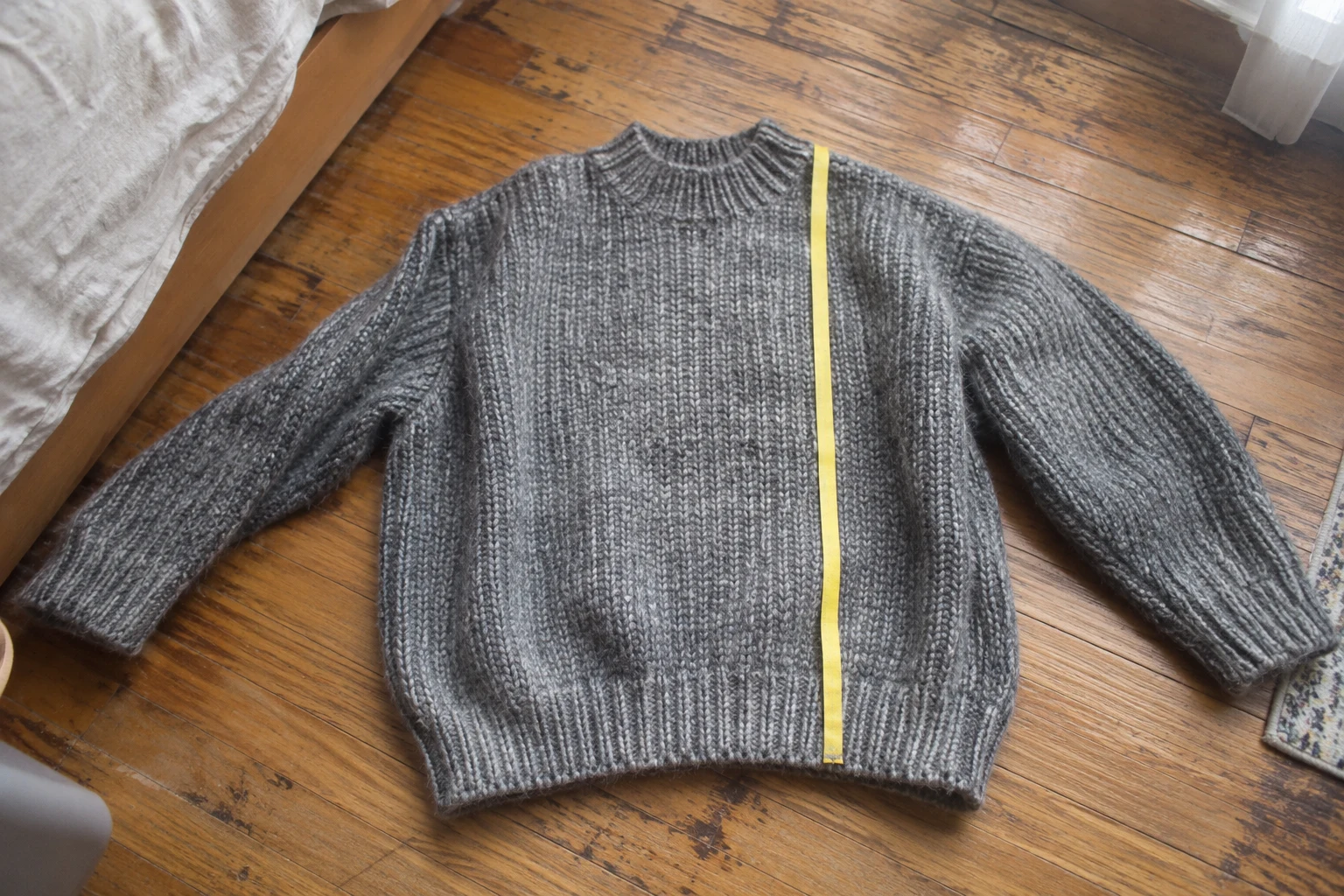
To measure sweater length, lay the sweater flat on a table, smooth it without pulling and let the ribbed hem relax. Place the tape at the high point of the shoulder beside the neck, run it straight down the front to the bottom hem and read once. Write down the start, the end and whether the knit was fresh from a drawer or just washed.
Why does sweater length need a method?
A sweater is a knit, so it can change length depending on how it has been folded, hung or washed. A number on a listing says very little unless it names where the tape started and what condition the sweater was in. Two sellers can give two different figures for the same sweater without either being wrong.
Treat a measurement as a short record: start point, end point, unit and condition. The rest of this guide shows how to take it and how to compare it with a sweater you already wear.
Where does the tape start?
Sizely's sweater measuring page and Orvis's measuring manual use the high point of the shoulder, the highest spot beside the neck, rather than the collar edge. Run the tape straight down the front to the bottom of the hem.
Some makers use the back neck instead. If a listing does not say which, do not guess. Our guide to HPS and center back shirt length explains why the two routes give different numbers on the same garment.
Set up the sweater without pulling it
Use a table or a clean floor. Lay the sweater face up and smooth the body with your open hand. Let the sleeves lie at its sides. Do not stretch the ribbed hem or the neckline to make them look tidy. If the cuffs or hem curl, leave them as they fall and note it.
- Find the high point of the shoulder beside the neck on the front.
- Place zero of a flexible, non-stretch tape there.
- Run the tape straight down, parallel to the center front.
- Read at the bottom edge of the ribbed hem, not at the fold of a turned-up band.
- Write the number and unit, lift the tape and measure again.
If the two readings differ by more than a few millimeters, check whether the sweater moved or the tape slipped, rather than averaging them.
Record the state: fresh, rested or just washed
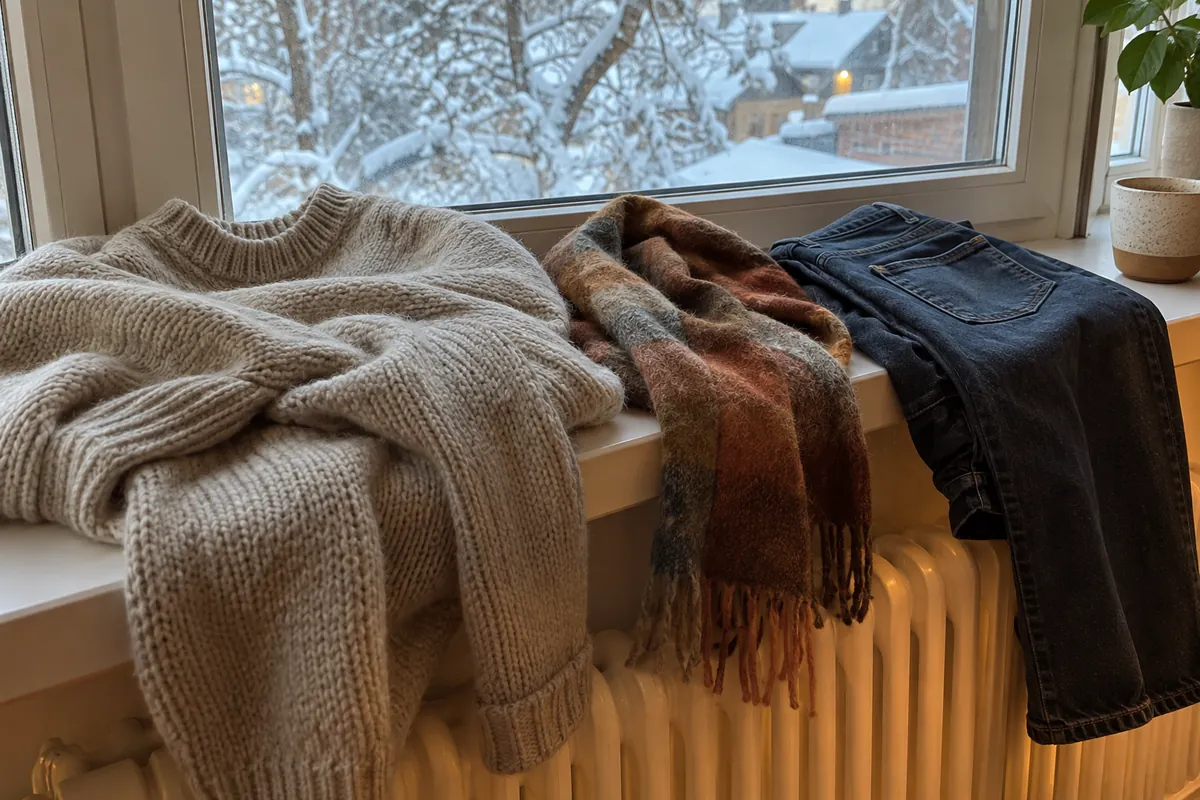
Knitwear can look longer after hanging and shorter after a wash. This guide does not claim a fixed figure for either. It asks you to record what you actually see.
The figures below are invented to show the note. They are not typical values.
| State | When you measured | Example length | Notes |
|---|---|---|---|
| Rested | Folded in a drawer, laid flat for 10 minutes | 64 cm | Hem relaxed |
| After hanging | Hung on a hanger for a day, then laid flat | 66 cm | Shoulders slightly pulled |
| After a wash | Dried flat, laid flat | 63 cm | Check the care label first |
If you compare a sweater with another, use the same state for both. Do not hang one and fold the other.
What if the hem is curved or there are side slits?
A sweater with a longer back, a split hem or a curved hem has no single length. Orvis describes measuring from the high shoulder point straight down to the level of the lowest part of the garment for an uneven edge. That is an attributed example, not a rule for every listing.
Record the front length and, if it matters, the back length separately. Do not average them.
Listing comparison checklist
Check each detail you have confirmed. These ticks stay on this page.
Compare with a sweater you already wear
Choose one sweater whose length you like. Measure it with the same method and condition, then compare the number with the listing. Wear it and note where the hem lands against your belt or hips, standing and seated. A matching number is a useful comparison, but a new sweater can still fall differently because of its weight, ribbing or fiber.
Use the flat clothing comparison guide for the rest of the record, including chest width. For the width, see the shirt chest-width method; a sweater can match in length and still be tighter across the chest.
What should you ask a seller?
Ask for four things: where the tape starts, where it ends, whether the sweater was resting flat and which unit was used. A useful message is: "Could you name the start and hem point for this length, and confirm the sweater was laid flat without stretching?" Keep the reply with the listing.
If the answer does not name a route, treat the number as unverified and compare it only with a sweater measured the same way.
Frequently asked questions
Where do you measure sweater length from?
The high point of the shoulder beside the neck, down the front to the bottom hem. Confirm whether a listing uses the back neck instead.
Should I stretch the sweater to measure it?
No. Lay it flat, smooth it gently and let the ribbing rest. A stretched reading records your pull, not the garment.
Does hanging change the length?
Knitwear can look different after hanging or washing. Record the state and compare like with like.
Can I convert HPS length to center back length?
Not reliably. Ask the seller for the same route on the actual sweater instead of adding an offset.