Fashion
How to Stop Impulse Buying Clothes You Will Not Wear
Give a good outfit idea time to become a considered purchase.
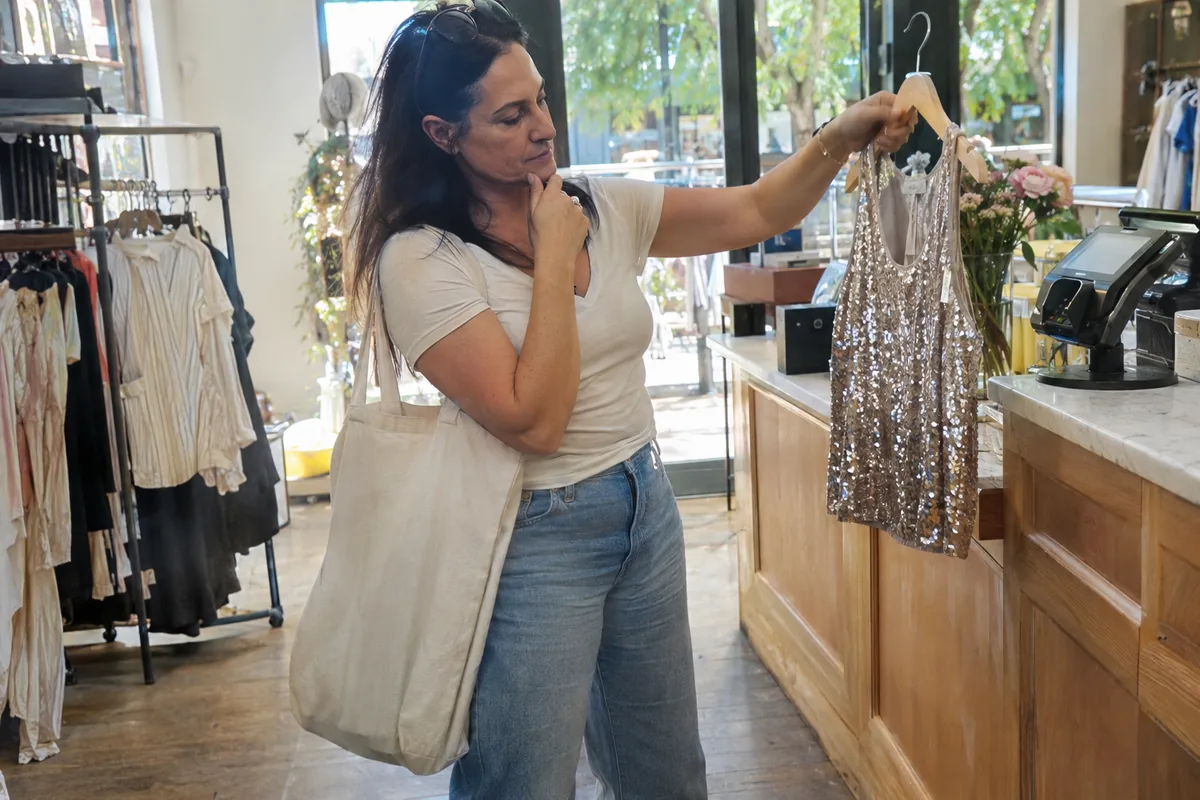
To stop impulse buying clothes, separate the moment you discover a piece from the moment you pay for it. Write down the exact item, its total price and the occasion you would wear it for. Return to the decision after checking your own wardrobe. A pause is useful because it gives you something concrete to check; it is not a promise that wanting the item will disappear.
Put the item on a list, then leave the shop
You can enjoy clothes without turning every good outfit you see into an order. The aim here is a small buying process that fits an ordinary week. It allows planned purchases, including pieces bought for pleasure. It also leaves room to say that a beautiful garment does not currently have a job in your closet.
Start with one recent purchase you did not wear
Pick one item with the tags still on, or something you wore once and then avoided. Write the reason in specific terms. Perhaps the sleeve catches under your coat, the trousers need shoes you dislike, or the dress belongs to a version of your calendar that rarely happens.
That reason becomes your next shopping check. If the problem was a difficult sleeve, try the new top under your own outerwear. If it was an imagined occasion, look at your actual diary. “Be more sensible” is hard to act on. “Sit down in these trousers before I buy them” is a decision you can make.
Keep the exercise small. You do not need to empty your entire wardrobe or count every mistake before making a better next choice.
Use a purchase note with five lines
Keep this note in a notebook or an ordinary notes app. It needs no wardrobe subscription or special equipment.
| Write this down | A useful answer | A reason to wait |
|---|---|---|
| What job does it do? | A washable layer for two office days | I might need it someday |
| What can I wear with it? | My navy trousers and brown flats | It needs another purchase first |
| What needs checking? | Sleeve room under my coat | I have not checked the fabric or fit |
| What will I actually pay? | Item, delivery and any alteration | I am counting only the discount |
| When will I decide? | After trying my existing option tomorrow | Before a countdown reaches zero |
Choose a waiting period you can follow. For a nonessential piece, reviewing the note the next day is a practical starting point. A larger or uncertain purchase may need longer. These are personal guardrails, not scientifically established deadlines or rules for essential replacements.
Check the clothes you already own
Before ordering a new outfit for dinner, put together one from your closet. Wear it with the intended underwear, shoes and coat. You may find the missing piece is a repaired fastening or a different layer, rather than a new dress.
If you still want the new garment, name its first real outing and at least one other way you would wear it. Occasionwear can be a deliberate exception; a dress for one wedding does not have to become a weekly staple. It does need an honest reason for its cost and storage space.
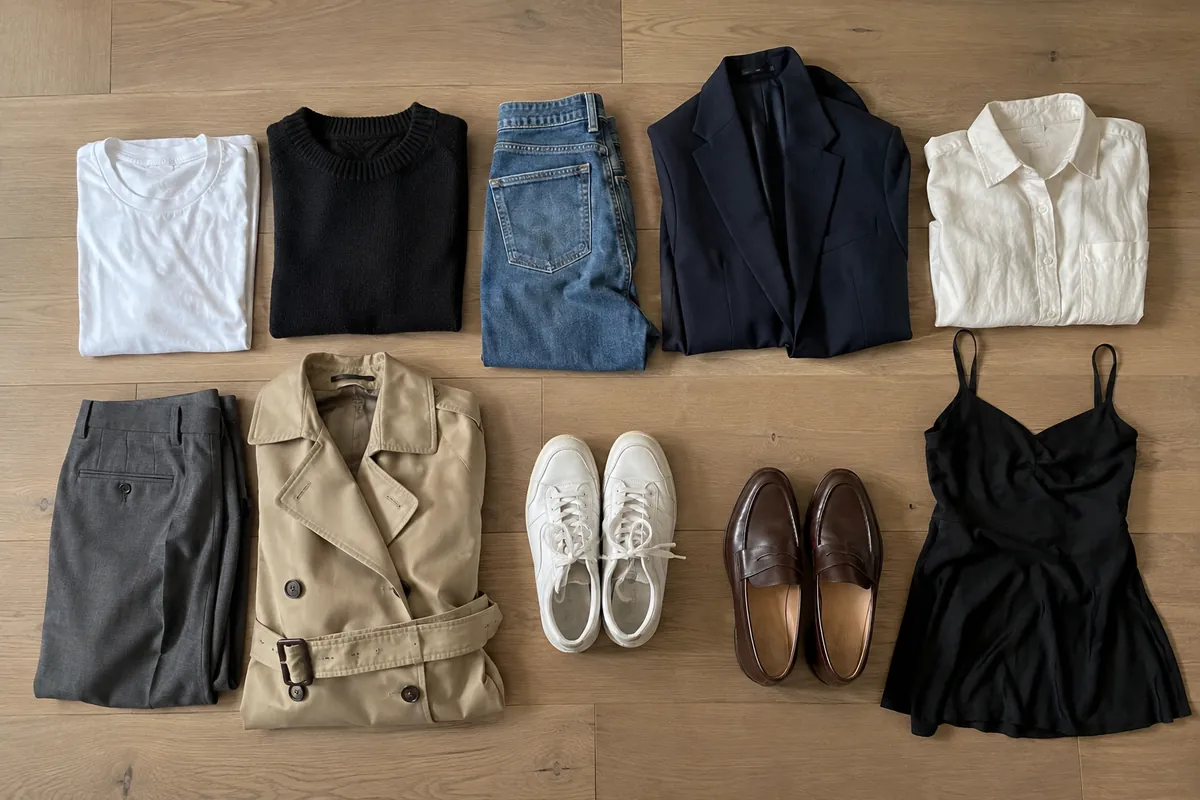
Use the capsule wardrobe guide when the same gap keeps appearing. A recurring lack of a comfortable work shoe deserves a different response from a feed full of shoes you admire.
Treat the sale price as a price
A discount describes a comparison with another price. It does not tell you whether the item fits, whether you can afford it or whether it belongs in your wardrobe. Write down the amount leaving your account, including delivery and any expected alteration, rather than the amount described as saved.
The FTC's online shopping advice recommends comparing total costs and checking return terms, including return shipping and restocking charges. Read those terms before paying. Clearance merchandise may have different conditions from full-price stock.
If you would need a refund to make the purchase comfortable, check the conditions especially carefully. A return can require packaging, a trip or a collection, and money may not come back immediately. Our sale-shopping checklist helps make that decision before the promotion starts.
Make the shopping route less automatic
Choose the one prompt that most often starts an unplanned purchase. It might be browsing sale emails during lunch, opening a retailer app while waiting, or saving outfits that lead straight to product pages. Change that route for a week: leave the email unopened, move the app away from your home screen, or save the outfit idea without the checkout link.
You are testing a habit, not proving discipline. If you like browsing, set aside a time for it and bring the purchase note. Looking at a garment can remain enjoyable even when the decision is “later.”
For secondhand shopping, carry your measurements and a short list. A one-off find still needs the condition and fit checks; scarcity does not make an unsuitable piece useful.
Try a seven-day example
Imagine a $48 blouse appears in a sale email on Monday. Your note says “Friday dinner,” but the only matching trousers are at the cleaner. On Tuesday, you try a blouse you already own with another pair and like the result. The proposed purchase no longer solves a problem.
On Thursday, your everyday cardigan develops a hole. You check whether it can be repaired and whether another layer covers your week. If replacement makes sense, you can shop deliberately for its fabric, measurements and care needs. Choosing that purchase does not undo Monday's decision.
At the end of the week, review what you postponed and what you actually needed. The useful result is a clearer distinction between an outfit idea and an immediate shopping job.
Use cost per wear as a check, not permission
The cost-per-wear calculation helps compare plausible uses. It cannot make an unaffordable garment affordable, and a generous estimate can make almost anything look reasonable. Try a conservative count based on a similar piece you already wear.
If the answer depends on suddenly becoming someone who goes out four nights a week, revise the estimate. If the item still fits your life, your available spending and your preferences after the pause, buying it can be a considered choice.
Add one measurement check to the pause
For an online listing, use the waiting period to compare a similar piece you already wear. Check whether the seller’s number is a flat width or a body measurement and whether both measurements start and end at the same points. If that information is missing, ask before paying instead of guessing. The flat clothing measurement guide shows how to label the comparison; a match does not replace checking the fabric and return policy.
Turn an unclear trouser length into one seller question
Before the checkout timer makes the decision for you, identify the missing field. For pants, ask whether the listed length follows the inside seam from the crotch point to the finished hem, and whether a cuff was folded or extended. A photograph of the tape can be more useful than a reassurance about the size label. Compare the answer with a pair you actually wear using the same method. If the seller cannot clarify it, leave that uncertainty in your decision rather than assuming the garment can be altered. Check the actual return conditions and any known alteration history. The purpose of the pause is to answer a specific outfit question, not to collect measurements that you will never compare.
| Before deciding | Keep explicit |
|---|---|
| Measure a reference pair | Its hem state and units |
| Check the intended outfit | What remains uncertain |
The flat inseam guide explains the seam route and hem endpoints to record before comparing trousers.