Fashion
How to Measure Pants Hip Width on a Flat Garment
A hip-width number needs a location, a setup and a clear label.
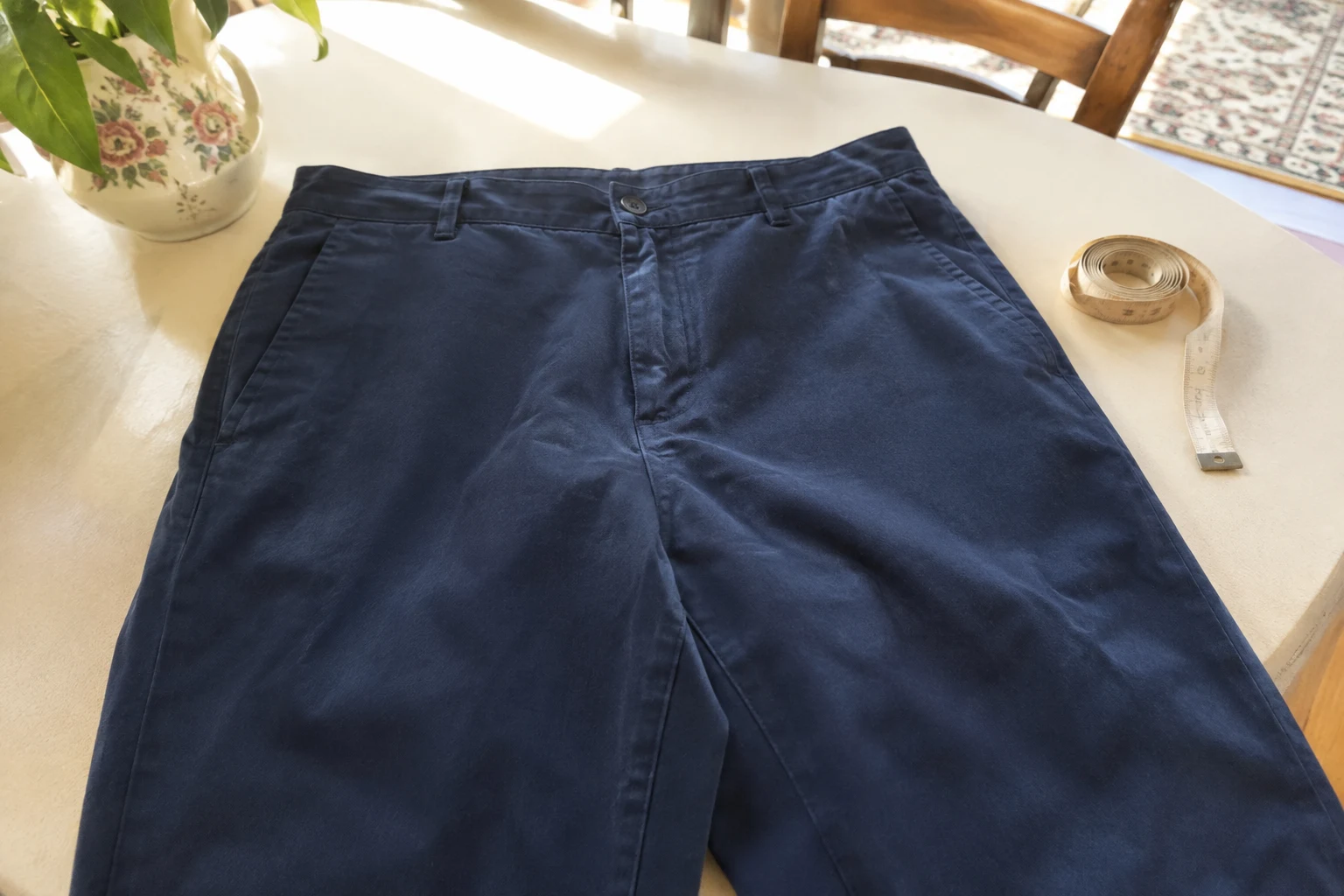
To measure pants hip width, close the waistband and fly, lay the trousers flat, and follow the seller's stated measurement line across the seat. Record where that line sits below the waistband, the width, units and pleat state. Compare another garment only when its method matches; hip width is not your body hip circumference.
Which hip measurement are you trying to compare?
A body hip measurement goes around a person. A flat garment hip width crosses a pair of trousers. A waistband width is taken at another location. Even when a listing calls all three a size, they are different quantities. Begin by naming the one you need, then ask where and how the seller measured it.
Use the flat-clothing comparison guide as the starting point. A useful record describes the route as well as the result. A number copied without its measurement line can make two similar-looking pairs appear different for reasons unrelated to their actual dimensions.
Set up the pants before placing the tape
Empty the pockets, close the usual waistband fastening and fly, and support the trousers on a flat surface. Smooth ordinary folds gently without stretching the cloth. Keep the front facing up if that is the method being followed. Do not pull the sides outward just to produce a wider reading.
Identify the seller's hip or seat line before measuring. Some instructions use a fixed distance below the waistband; others locate the fullest seat. Those approaches should not be silently treated as identical. Record the stated setup and any uncertainty. If a listing supplies no method, ask before declaring that its width matches your favorite pair.
Does every brand measure at the same distance?
No. Proper Cloth's hip-width instructions specify a line seven inches below the top of the waistband for its method. That is a reference for reproducing that brand's measurement, not a rule imposed on every pair of trousers.
The Clogger pants measurement sheet distinguishes the top-of-hip reading from the seat and records the distance between them. The useful lesson is to preserve the named location. Copying a width while discarding its vertical position loses part of the specification.
| Record | What to write | Why it matters |
|---|---|---|
| Garment setup | Front up, fastenings closed, relaxed cloth | Supports a repeatable comparison |
| Measurement line | Seller's stated distance or seat location | Width varies along the garment |
| Reading | Flat edge-to-edge width and units | Keeps width separate from circumference |
| Construction | Pleated or flat front, state as measured | Prevents an unsupported equivalence |
| Unknown method | A question for the seller | Stops a guessed comparison |
Can you double the flat width?
Doubling gives an arithmetic double-width value. For a fictional 21-inch reading, 21 × 2 equals 42 inches. Write that as a derived garment value beside the original 21-inch flat measurement. Do not relabel it as a measured body hip size or a guaranteed fit.
The example does not establish how much ease a wearer needs. Shape, fabric, lining and movement remain relevant. A pair that matches one width can differ elsewhere. Compare thigh width and rise measurements separately, using their own routes rather than trying to infer them from the seat.
Listing comparison checklist
Check each detail you have confirmed. These ticks stay on this page.
How should you handle pleats or stretch fabric?
Write down the construction and state you actually measured. A pleat changes the relationship between the laid-flat cloth and the garment when worn. Proper Cloth explicitly gives separate guidance for its pleated models. Do not borrow a model-specific adjustment and apply it to an unrelated secondhand pair.
Likewise, a relaxed stretch-fabric reading is not an extended reading. If the seller supplies an extended measurement, ask how it was obtained and keep it separate. Avoid forceful stretching or opening delicate construction to chase a desired value. An unknown state stays unknown until clarified.
Build a listing note someone else can repeat
Keep the original reading, units, route and setup together. A photograph can show the tape position, but the written note should still explain where the line sits. Reposition the garment and repeat the same method once as a consistency check; do not average readings taken on different lines.
A fictional comparison note might say: pair A is 21 inches across at the seller's stated seat line; pair B is listed as 42 inches around, but its line and pleat state are unspecified. The next step is a method question, not a claim that the two fit alike. For length, use the inseam method rather than deriving it from a hip photograph.
Frequently asked questions
Is hip width the same as waist width?
No. They describe different locations on the garment. Keep both routes and labels in your record.
Is flat hip width the same as my body hip measurement?
No. One crosses a garment and the other goes around a person. Doubling a width does not establish a fit allowance.
Where should I measure if the seller gives no hip line?
Ask which method produced the listing number. Record your own route clearly, but leave the comparison unresolved until the methods match.