Fashion
How to Measure an Elastic Waistband Without Mixing States
A useful elastic-waist measurement needs a state as well as a number.
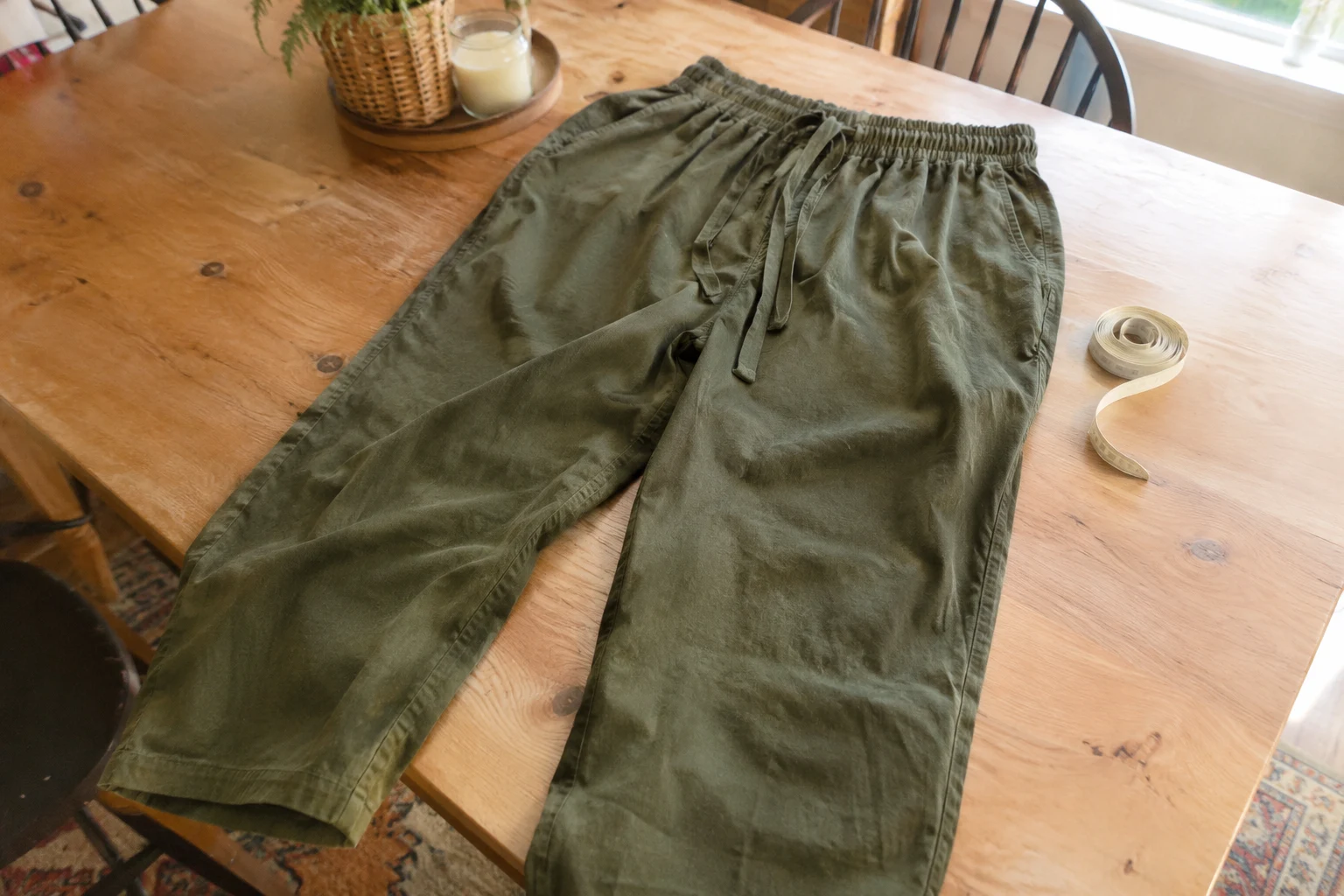
To measure an elastic waistband on finished pants, lay the garment flat and relaxed, release the drawcord and follow the seller's stated edge-to-edge route. Label the value as a relaxed flat width. Keep a stretched measurement separate, and ask for the seller's method before comparing it with your body waist or another garment.
Are you measuring finished pants or cutting new elastic?
These are different tasks. A listing measurement describes a garment that already exists. A sewing calculation chooses a piece of elastic for a casing and wearer. Do not turn the relaxed width of finished trousers into a cutting instruction. This guide concerns finished garments, especially secondhand listings and comparisons with a pair you own.
Our flat-clothing comparison guide explains why matching labels is insufficient when methods differ. Before taking a number, write down whether you need a body measurement, a flat garment width or a construction specification. That one line prevents a surprisingly large comparison error.
Set up the relaxed waistband
Empty the pockets and support the trousers on a flat surface. Untie a drawcord rather than leaving it cinched. Settle the elastic without pulling the waistband open to remove every gather. Close any fastening required by the seller's method, then identify the measurement route they specify.
Sizely's sweatpants guide describes a relaxed across-waist reading and cautions against using an elastic limit as a substitute for how the garment wears. Use that as a named method, then check the actual seller's instructions. The same word on another chart may conceal a different setup.
Take the reading without stretching the tape or garment. Record both the unit and the state. If you repeat the measurement, let the waistband settle again first. A moving drawcord, folded edge or changed tension can produce a different number without the garment having changed size.
| Record | Useful label | Do not substitute |
|---|---|---|
| Across a relaxed finished waistband | Relaxed flat width, route and unit | Body waist circumference |
| Across an extended waistband | Extended width, stated method | A guaranteed comfortable waist |
| Around the wearer | Body waist, stated location | A finished garment reading |
| Elastic before sewing | Cut length, pattern instruction | A secondhand listing dimension |
What does doubling the flat width establish?
It changes the reported quantity, not the fit evidence. For an illustrative listing that explicitly uses twice a flat width, a 35 cm reading becomes a nominal 70 cm garment measure by that convention. The arithmetic does not establish that the trousers comfortably fit a person with that waist. Elastic tension, rise and the rest of the garment remain separate questions.
Keep the original flat value beside any doubled figure. Do not label it simply waist size. If the waistband is shaped or your measurement route differs from the seller's, ask before applying the same conversion. A precise calculation cannot repair an ambiguous method.
Listing comparison checklist
Check each detail you have confirmed. These ticks stay on this page.
Should you also measure the waistband stretched?
Only compare an extended value when its method is stated. A maximum extension and a lightly extended reading are different observations. Do not force an unfamiliar or older garment to obtain a larger number. If the seller gives no method, request clarification and keep the relaxed reading as the observation you actually made.
LESTRANGE's relaxed-trouser fit page illustrates why elastic construction belongs alongside a garment chart. Its product guidance applies to that product; it is not a universal allowance for every elastic-waist trouser. Avoid adding an assumed amount of stretch to an unrelated listing.
Compare more than the waistband
Check the pants rise and flat thigh width using compatible methods. A pull-on waistband also has to work with the way you put the garment on, while the seat and legs need their own room. One elastic measurement cannot establish the whole fit.
If your comfortable reference pair has a different rise, its waistband may sit elsewhere on your body. Keep that distinction in the note. For a fictional comparison, two equal relaxed widths with different rises remain two different garment shapes, not equivalent sizes.
Make the seller's next answer easy
Ask a narrow question: is this a relaxed edge-to-edge width, was the drawcord released, and where does the tape run? Request the unit and whether the number is already doubled. If an extended reading is supplied, ask what extension method it represents. Leave an unanswered point unknown instead of silently choosing the most favorable interpretation.
A complete note can be short: garment identifier, relaxed state, route, units, original value and unresolved questions. Keep that note beside the listing while you decide. It is more useful than a single waist number that has lost its method.
Frequently asked questions
Is a relaxed waistband measurement my body waist size?
No. It describes the garment in a named state. Body size, tension and intended fit remain separate.
Do I pull out every gather before measuring?
Not for a relaxed reading. Follow the named method and keep any extended reading separate.
Can I use this number to cut replacement elastic?
This is a finished-garment comparison method. Use the applicable sewing pattern or a repair assessment for a cutting decision.