Fashion
How to Measure Pants Knee Width Flat Without Mixing Methods
The width is useful only when you know where down the leg it was taken.
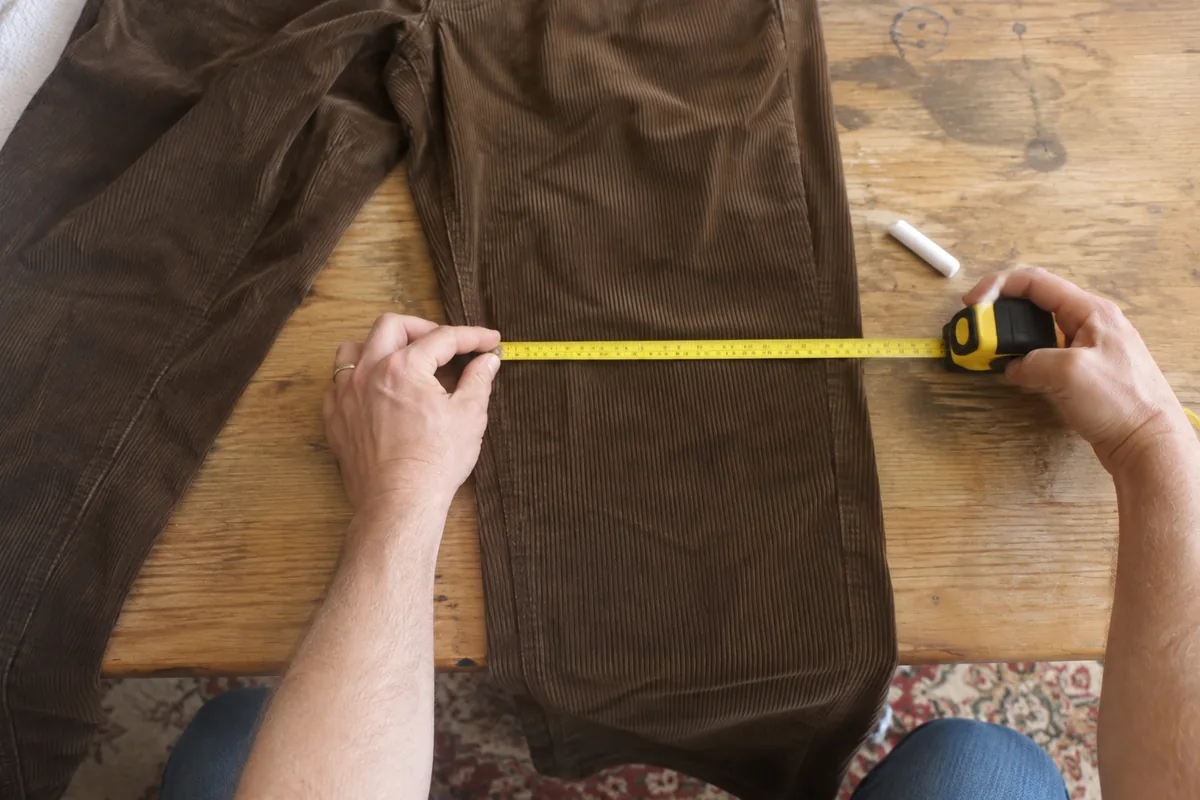
For a flat pants knee measurement, follow the seller's stated method for locating the measurement line, then measure straight across the supported leg without stretching. Record that location, the width, units and garment state. Compare another pair at the same defined point rather than assuming all knee measurements use one position.
Find the measurement line before reading the tape
Pants knee width is a horizontal garment measurement at a defined point down the leg. The position matters: a tapered or flared leg can have different widths at nearby points. A listing that supplies a knee number without explaining its location leaves part of the comparison unanswered.
Begin with the maker's diagram or ask the seller how the point was found. Do not put the tape where your own knee seems likely to sit and assume that reproduces a garment specification. Our flat inseam guide explains the separate length route often used to establish a reference down the leg.
| Note field | What belongs there |
|---|---|
| Position | Maker's stated point and locating method |
| Span | Straight across the flat leg at that point |
| Garment state | Relaxed fabric, hem and alteration state |
| Units | Original inches or centimeters |
Two makers describe different locating methods
Proper Cloth's knee-width instructions place the line two inches above the midpoint of the inseam. Its setup lays the trousers on their side along the creases, exposes the lower leg and measures across it perpendicular to the inseam. That is a method to reproduce when comparing one of its readings.
Luxire's garment guide uses a fold that brings the leg bottom toward the crotch and places its reading one inch above the fold. Keep that method attributed to Luxire. Do not average the two offsets, apply one to a number measured with the other, or publish a universal knee location from either example.
If an altered hem makes a midpoint-based location different from an earlier specification, retain the current hem state in your note. Ask which length the seller used. A precise width at an unexplained point is still not a matched comparison.
Support the leg and leave the cloth relaxed
Use a surface large enough to hold the relevant part of the trousers. Smooth ordinary wrinkles gently without pulling the cloth taut. Follow the chosen setup rather than adding your own folds to make the tape lie neatly. Keep the tape straight across the named line and read it at the edges specified by that method.
Repeat the reading after resetting the fabric. If the results differ, inspect the position and layout before rounding them into a single confident number. Check the other leg when useful and label it separately. A second reading is a consistency check, not a new allowance to add to the measurement.
A body knee measurement belongs in another field
Luxire's body-measurement guide describes a tape going around the knee itself. That is a body circumference, unlike a width across a garment lying flat. Keep the two records separately named. Do not double a flat garment number and treat the result as a guaranteed body-size recommendation.
The fabric, pattern and intended silhouette still affect how trousers feel. A knee width alone cannot establish comfortable sitting or whether a tapered leg suits the outfit you want. Our thigh-width guide covers a different point on the same garment, and pants rise concerns another dimension again.
Build one reference you can reuse
Choose a pair you actually wear in the intended way. Record the locating method and width on that pair, then ask for a matched measurement on the pair you are considering. Keep an unclear seller response unresolved rather than substituting the size label. A photograph showing the tape position can help clarify the question.
Listing comparison checklist
Check each detail you have confirmed. These ticks stay on this page.
Use the note to retain the original readings and setup. It does not choose a size or inspect a listing. Before buying, consider the whole garment and its real return conditions; before requesting an alteration, ask what the physical trousers allow.
Questions about the knee measurement
Is the knee always halfway down the inseam?
No universal location is assumed here. Follow the maker's named method; the two cited garment guides use different offsets.
Is knee width the same as the leg opening?
No. Keep a width at a defined point down the leg separate from the width at the hem opening.
Can one knee width guarantee that pants fit?
No. It supports a matched garment comparison but does not establish the whole fit, comfort or alteration possibilities.